Fear Math and Hate Investing? CNBC’s Jim Cramer is the Cure
And if that doesn’t confuse you, could you pick the best stocks among the nearly 50,000 companies outside of U.S. borders that are also publicly traded?
You might.
But you might also overlook some great stocks, too, which are often overshadowed by the likes of Nvidia, Microsoft, Palantir and many other high-tech darlings.
 That’s the great thing about CNBC’s Jim Cramer.
He does the homework, explaining what influences financial markets along with which stocks to consider adding to your portfolio and those that should be tossed overboard.
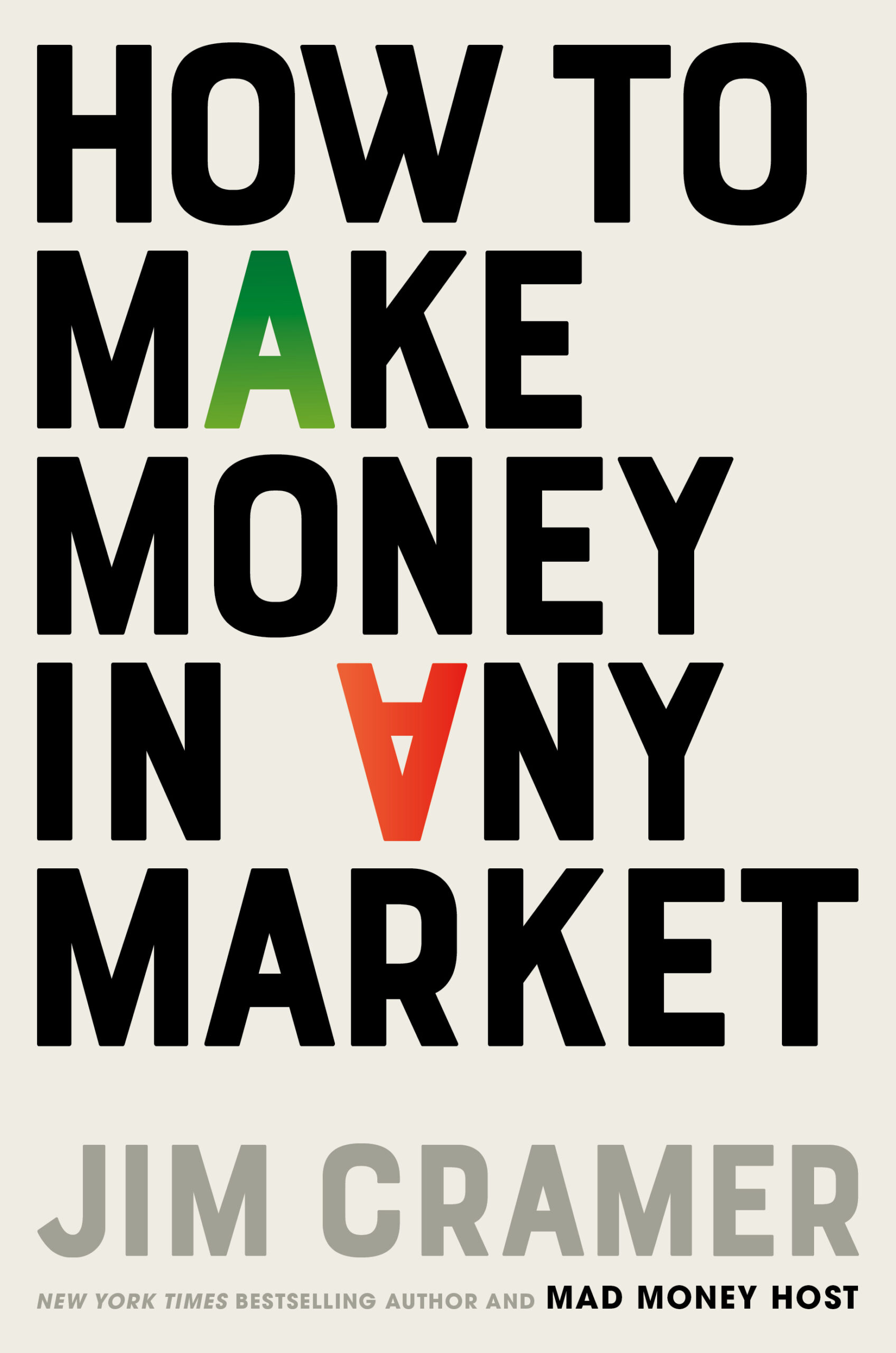
As I see it, the “Mad Money” television host is undersold by his publisher. He’s not just a “personal financial expert,” as described on the back cover of his newest and eighth book, How To Make Money In Any Market.
He’s America’s Financial Advisor – and an outstanding one at that, with an estimated television audience of about 127,000 viewers. His online following is stronger, with 2.2 million followers on X and more than 500,000 on LinkedIn.
And after watching his show a few times, something else becomes clear: He loves his work. And because he loves it, he does a better job of explaining financial markets and individual stocks than anyone else.
Sure, Cramer’s controversial but the critiques – from what’s on Google – are dated.
He’s not your father’s Louis Rukeyser, the pun-filled late host of “Wall Street Week” on PBS and, later, CNBC’s “Wall Street,” although perhaps he could use the same “calming infusion of brandy” Rukeyser once said he required after considering the trajectory of the Dow Jones Industrial Average, money funds, Treasury Bills and gold markets – by 8:30 a.m.
Cramer’s lively, animated and bouncy delivery keeps audiences alert, especially when using his soundboard to illustrate those companies in his crosshairs – both good and bad.
Better yet, he makes his intent clear: He works to make his audience money and find a bull market wherever it exists.
I can attest to the veracity of his intent: I’ve purchased stocks he recommended, and they worked for me.

Why Buy Stocks?
Retirees or those soon to be retired, who are alive in 2035, could be in for a big surprise when it comes to their monthly Social Security checks. It’s possible they could be reduced to 83% of what they are today.
The average monthly Social Security check is $1,976.00, says the Social Security Administration, but if it drops to 83% of the current amount, the average monthly payment will decrease more than $300 to $1,640.08. What will you be able to buy with that? I don’t want to think about it.
In addition, defined pension plans, on the decline since the 1980s, means many workers are already buying stocks, possibly bonds, too, through a 401(k) plan, which places a percentage of their earnings from each paycheck into an account that’s likely invested in a mutual fund or an exchange traded fund.
But if you want a comfortable retirement, where money isn’t a constant worry, you’ll need to invest so you have the necessary funds to keep you in your preferred lifestyle.
Or perhaps you’re looking for a way to prevent your kids from borrowing against their future earnings when they go to college. In other words, if you want to assure that they’re debt-free (due to tuition costs) when they graduate, you’ll need to invest – likely starting when they’re born, if not earlier.
There are many other reasons, too: So, you can buy that second house; get that cool car; start a business; the proverbial rainy day; take that once-in-a-lifetime trip. Whatever the reason, whatever the dream, it’ll likely require you to invest – so you can afford it.
“The only real place to get rich is in individual stocks, augmented by the relative safety of index funds,” writes Cramer in the book’s opening pages. “And the best way to get comfortable with the ups and downs of the market is to understand them.”
Fear and Loathing of Financial Markets
Cramer acknowledges there’s a phobia about the stock market.
“Here’s what people imagine happens in a stock market crash,” he writes. “They imagine that one day they have $100 in their account, the market drops by 50%, they now have $50, they take it out of the market, and they have lost the other $50 forever.”
The long-term investor, he says, knows differently.
In a “few months, a year, maybe a couple of years at the very worst, the market will be right back to where it was,” he writes. “Once the market returns to where it fell from, it continues to advance on its way to even higher, far higher, unimaginably higher.”
One of things I’ve enjoyed when watching Cramer on “Mad Money” is that he’s down to earth.
He comes across the same way in this book: He acknowledges his mistakes, even writes about them, so his readers don’t repeat them.
He also explains the value of diversification in stock holdings – so they’re not clustered in one industry – the best places to learn about stocks; where they can be researched so you know which ones to buy (check out Yahoo Finance) and, better yet, he takes the mystery out of financial tools only an accountant can love, balance sheets and income statements.
In other words, he explains them in a way so anyone, regardless of their educational background, understands them.
If a guy like me, someone who consciously avoided math classes while working on his bachelor’s degree and, then, only took the necessary ones while earning his MBA, can figure out which stocks to buy and has been successful doing so – with help from Jim Cramer and by diligently reading Barron’s and Investor’s Business Weekly and a few other financial news sites – you can, too.
It just takes effort.