

Country Music Stars and a former Wall Street Journal columnist agree: You don’t need your name in the Marquee Lights
If there’s something you might find contemptible and preposterous, it’s how your friends, family, coworkers and others, like your neighbors, manage their money. Some are likely to be spendthrifts, while others pinch pennies quicker and tighter than Ebenezer Scrooge.
As Morgan Housel points out, their behavior is explainable.
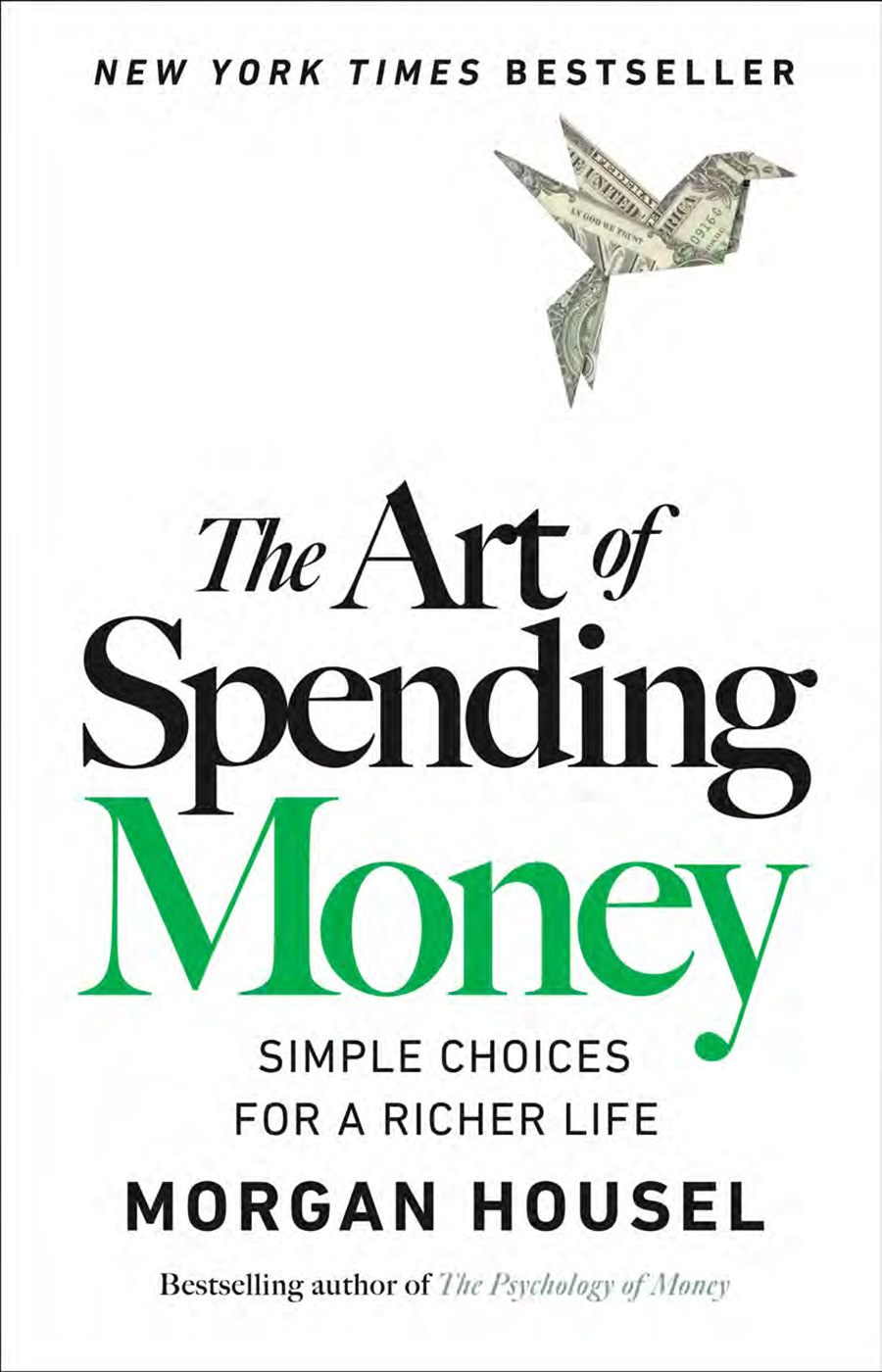 A former columnist at The Wall Street Journal and The Motley Fool, and the author of two previous books, The Psychology of Money and Same As Ever, Housel appears to have completed the circle of advice about the best way to see and manage money while unraveling what you might see as bizarre conduct in others in his new book, The Art of Spending Money. As with the two earlier books, he’s done it splendidly.
“To understand why people spend the way they do, you have to dig deep into their life experiences,” he writes.
And therein lies the problem: If you don’t know their life story, and what shaped their values, you’ll never know their logic, only your annoyance, possibly worse.
“Their decisions often reflect the social and psychological experiences of life,” Housel writes. “And since life experiences vary dramatically from person to person, what makes sense to you might seem crazy to me, and vice-versa.”
Two people I know well are perfect examples. They share many similar experiences: Both served in the Army, worked for big corporations, saw professional success, married and had children. But there’s a critical distinction.
One is the firstborn and, sometimes, that can make a crucial difference. The other is the youngest.
The former saved and invested their money and, as a result, is financially stable. As for the latter, well, it’s the antithesis and they’re living with the consequences. Of course, not every firstborn is responsible; for that matter, not every youngest child is carefree and irresponsible.
“If you struggle to gain respect and admiration through your intelligence, humor, empathy, or capacity for love, you might default to the only remaining – and least effective – lever: your stuff. Look at my car, beep, beep, vroom, vroom,” Housel writes, explaining how people manage their money likely reflects something deeper.
But keep something in mind: The only people likely paying attention to what you think are your cool, new toys are strangers, not close friends, loved ones, or family members – and they’re gawking.
Ostentatious spending, like junk food, is “very tempting, immediately satisfying, but long-term damaging,” Housel warns.
So how should you manage your money?
This is where Housel is at his best.
“This successful life we’re living …”

You don’t need to be rich – as in packed with billions like a Silicon Valley tech titan – to live comfortably and independently. Of course, how much money you need depends on where you live; some parts of the country are more expensive than others.
What’s critical is having enough money so you live in a way that’s free of worry. This is Housel’s great mantra. If possible, you want to be free of a mortgage in a house or condominium you enjoy or, at the very least, in one that suits your needs without costing much to keep up.
Does that mean a 10-bedroom, 11-bathroom, 35,000 square-foot mansion?
Likely no. There’s a lot to be said for modesty.
To rely on yourself and your financial assets is a great gift and achievement. Not only you will be able to pay the bills easily, and you’ll likely be happier, too, because you’ll have that much more control over your life.
“Your morals, your values, your personality, your friendships, who you seek attention and admiration from – you must control these things regardless of how much money you have in order to have a decent life,” he writes.
If you assume more money will improve your life, Housel counsels, “that’s when the money you have – or even just your ambitions for more – take control over your life.”
You need to see money as a tool. It can make your life better. But you need to control it, as well as your ambitions, not the other way around.
“That’s when you become wealthy,” Housel writes.
 While it may never have been the intentions of the songwriters and the singers, country music stars Waylon Jennings and Willie Nelson crooned similar advice way back in 1977:
… “So baby, let’s sell your diamond ring
Buy some boots and faded jeans and go away
This coat and tie is choking me
In your high society, you cry all day
We’ve been so busy keepin’ up with the Jones
Four car garage and we’re still building on
Maybe it’s time we got back to the basics of love”
~ “Luckenbach, Texas (Back to the Basics of Love)” by Chip Moman and Bobby Emmons


